In March 2013, the South Korean government, under the newly inaugurated administration of President Park Geun-hye, implemented a revised version of the Minor Offenses Act. Among the various updates to the legal code was a specific provision regarding "overexposure" in public spaces, which immediately ignited a firestorm of controversy both domestically and internationally. While the law was officially characterized by the National Police Agency as a measure to curb public indecency and "streaking," it was quickly interpreted by critics, celebrities, and international media outlets as a regressive return to the authoritarian dress codes of the 1970s. The ensuing debate highlighted the deep-seated historical sensitivities within South Korean society and the challenges of legislative communication in the age of social media.
The Legislative Framework of the Overexposure Law
The controversial provision was part of a broader revision of the Minor Offenses Act, which was approved during a cabinet meeting presided over by President Park Geun-hye shortly after she took office. The law, which went into effect on March 22, 2013, stipulated that individuals who "cause discomfort to others by excessively exposing their bodies or revealing parts of the body that should be covered" would be subject to a fine of 50,000 South Korean Won (approximately $45 to $48 USD at the time).
The revision replaced older, more vaguely worded statutes and sought to standardize the penalties for a range of minor public disturbances. Beyond overexposure, the updated Act covered 28 different offenses, including persistent stalking, public urination, littering, and the unauthorized distribution of advertisements. However, the specific mention of "overexposure" overshadowed the other provisions, leading to widespread speculation that the government intended to regulate the attire of private citizens, particularly women.
Historical Context: The Legacy of the Yushin Era
To understand the intensity of the public reaction, one must look back to the administration of President Park Geun-hye’s father, Park Chung-hee, who ruled South Korea from 1961 to 1979. During the 1970s, under the authoritarian Yushin Constitution, the South Korean government exercised strict control over the personal lives and cultural expressions of its citizens. This era was characterized by the "Mini-skirt and Long-hair Crackdown."

During this period, police officers were famously equipped with bamboo rulers to measure the distance between a woman’s knee and the hem of her skirt. If a skirt was more than 20 centimeters (approximately 7.8 inches) above the knee, the wearer could be fined or detained. Similarly, men were prohibited from growing their hair beyond a certain length, and those found in violation were often subjected to forced haircuts on the spot. These measures were framed as an effort to maintain "public morality" and "social order," but they became lasting symbols of state repression.
When the 2013 overexposure law was announced, the historical parallel was unavoidable for many South Koreans. The fact that the new law was introduced by the daughter of the leader who had pioneered such restrictions created a powerful narrative of "like father, like daughter," fueling fears that the country was sliding back toward its authoritarian past.
Chronology of the Controversy
The timeline of the controversy reveals how a domestic legal update rapidly transformed into an international scandal:
- March 11, 2013: The South Korean Cabinet, led by President Park Geun-hye, approves the revision of the Minor Offenses Act.
- March 12–15, 2013: Domestic news outlets begin reporting on the new fines. Opposition politicians and social media influencers express concern that the law is vaguely defined.
- March 18, 2013: High-profile celebrities, including K-pop icon Lee Hyori, take to social media. Lee tweeted, "Is the overexposure fine for real? I’m so dead," a comment that was widely shared and interpreted as a sign that the entertainment industry felt targeted.
- March 20–22, 2013: Major international news organizations, such as CNN and The Daily Mail, pick up the story. Headlines often framed the law as a "ban on miniskirts," leading to a global perception that South Korea was implementing a puritanical dress code.
- March 25, 2013: The National Police Agency issues a formal clarification to stem the tide of misinformation. They emphasize that the law is intended to address public nudity and "indecent exposure" (such as flashing) rather than everyday fashion choices.
Official Responses and Clarifications
As the "miniskirt ban" narrative gained traction, the South Korean government and law enforcement agencies found themselves in a defensive position. The National Police Agency (NPA) held briefings to clarify that the 2013 revision actually represented a decrease in the severity of the law rather than an expansion of it.
According to the NPA, the previous version of the law allowed for the possibility of short-term imprisonment for indecent exposure. The 2013 update sought to decriminalize the offense to some extent by making it a "summary offense" punishable by a fixed fine, thereby streamlining the legal process and reducing the burden on the judicial system. Inspectors clarified that wearing a miniskirt or a low-cut top in public would not constitute a violation of the law. Instead, the statute was designed to penalize individuals who exposed themselves in a manner that was clearly intended to cause sexual offense or public alarm—behaviors that are regulated in nearly all modern democracies.
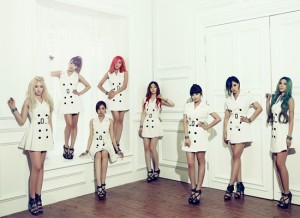
Government spokesperson Kim Haing also addressed the rumors, stating that the public’s concerns were based on a misunderstanding of the legislative intent. The administration argued that the law was a common-sense measure to ensure public comfort and had no relation to the fashion industry or the K-pop "Hallyu" wave.
The Role of Media and Social Networks
The "overexposure law" incident serves as a case study in how information can be distorted through the "echo chamber" of digital media. While the original legislative text was dry and technical, the cultural context of South Korea made it "sticky" news.
Western media outlets, in particular, were criticized for sensationalizing the story. By framing the law as a direct threat to the K-pop industry—an industry known for its use of short skirts and stylized costumes—media outlets ensured high click-through rates. This framing, however, ignored the legal reality that South Korean police had no intention of patrolling music video sets or fashion runways.
Furthermore, the role of South Korean celebrities was pivotal. Figures like Lee Hyori possess immense cultural capital, and their reactions often serve as a barometer for public sentiment. When Lee tweeted her concern, it validated the fears of the youth demographic, regardless of whether those fears were legally grounded. This highlighted the difficulty the Park administration faced in building trust with a generation that remained skeptical of her family’s political legacy.
Broader Impact and Implications
The controversy over the overexposure law had several lasting implications for South Korean governance and public discourse:

1. Legislative Precision
The incident underscored the necessity for precise language in legislation. The term "overexposure" (과다노출) was sufficiently vague that it allowed for multiple interpretations. Legal experts argued that the government should have used more specific terminology related to "indecent exposure" or "public nudity" to avoid confusion with fashion.
2. The Power of Historical Memory
The backlash demonstrated that historical trauma continues to shape South Korean politics. Even a minor administrative update can be viewed through the lens of the 1970s if it touches upon personal freedoms. For the Park Geun-hye administration, this served as an early lesson in the sensitivity required when dealing with issues of civil liberties.
3. Impact on the K-pop Industry
Despite the hysteria, the K-pop industry remained largely unaffected. The visual aesthetics of "Idol" groups continued to evolve without government interference, proving that the law was never intended to be a tool for cultural censorship. However, the event did prompt a brief discussion within the industry about the "sexualization" of underage performers, though this debate remained separate from the legal enforcement of the Minor Offenses Act.
4. International Perception of South Korea
The speed with which the "miniskirt ban" story spread globally showed how vulnerable South Korea’s international image is to narratives of "backwardness." For a country that prides itself on being a high-tech, modern democracy, the characterization of its government as a "fashion police" was a significant public relations setback.
Conclusion
The 2013 South Korean overexposure law was a routine legal update that became a global flashpoint due to a combination of historical baggage, celebrity influence, and sensationalist journalism. While the law remains on the books as a minor regulation against public indecency, its legacy is defined more by the debate it sparked than by the fines it generated. The incident remains a reminder of the complex interplay between law, culture, and memory in a society that is still navigating the shadows of its past while maintaining its status as a global cultural powerhouse. In the years following the controversy, the feared "miniskirt crackdown" never materialized, and the streets of Seoul remained as fashion-forward as ever, proving that the "sea of fire" predicted by the media was, in fact, a mere ripple in the legislative pond.