South Korean vocal powerhouse Song Ga In, renowned for her explosive vocal delivery and mastery of traditional Korean music genres, recently captivated audiences and ignited discussion by revealing her unconventional pre-stage preparation routine. During an appearance on the popular music web variety show Monthly Daum, the celebrated singer disclosed that, unlike most professional vocalists, she foregoes traditional vocal warm-ups, a revelation that astonished her host and subsequently sparked widespread interest among netizens and music industry observers. This candid admission offers a unique glimpse into the vocal resilience honed through her extensive Pansori training from a young age, positioning her as an outlier in an industry that typically prioritizes rigorous vocal conditioning.
The Revelation on Monthly Daum
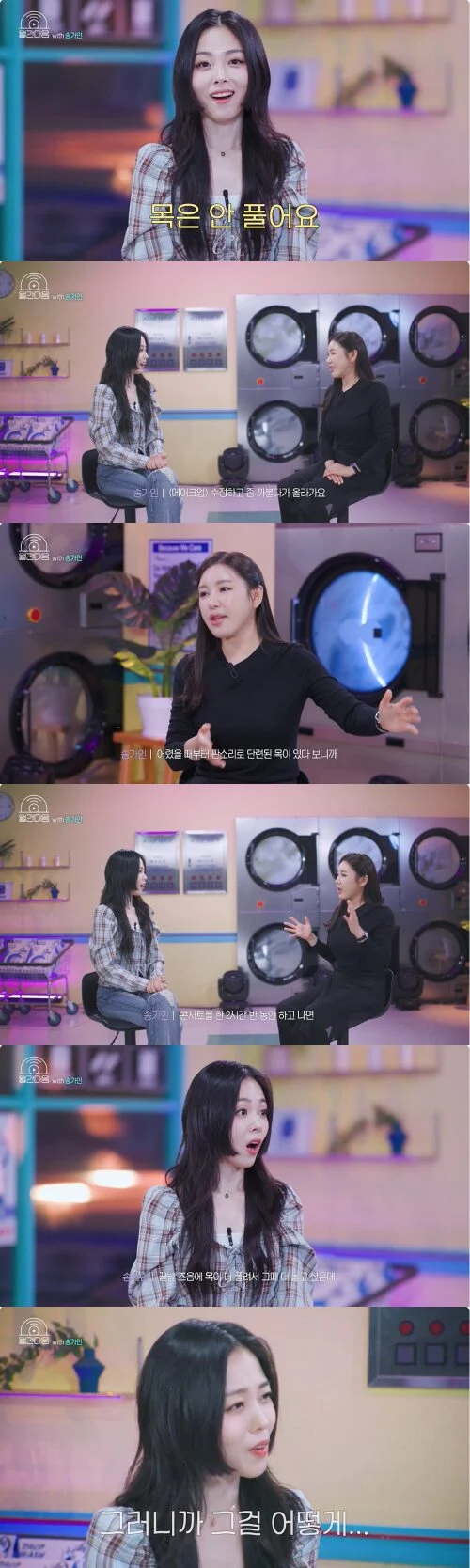
The surprising confession came to light on September 22nd, during the sixth episode of Monthly Daum, a widely followed web variety program streamed on the portal site Daum. The show, which features in-depth interviews and musical collaborations with prominent artists, hosted Song Ga In as its latest esteemed guest. During a segment of the program, the show’s host, fellow accomplished singer HYNN (Park Hye Won), posed a standard question about pre-performance rituals, inquiring, "I know you perform numerous shows, but do you have any vocal warm-up routines before going on stage?"
HYNN’s question is a common one in interviews with musicians, as vocal warm-ups are almost universally considered an indispensable part of a singer’s preparation. These routines typically involve a series of exercises designed to gradually stretch and prepare the vocal cords, increase blood flow, improve breath control, and ensure optimal resonance, thereby preventing strain and maximizing performance quality. From classical opera singers to contemporary pop stars, most artists dedicate significant time to these preparatory steps. Therefore, the expectation was for Song Ga In to detail her specific regimen, perhaps involving scales, humming, or breathing exercises.
Song Ga In’s Unconventional Approach
However, Song Ga In’s response defied these expectations, leaving HYNN visibly surprised. "I don’t warm up my voice," Song Ga In stated matter-of-factly. She elaborated on her unique pre-performance ritual, describing a more relaxed and seemingly casual approach: "I just fix my makeup and fool around a bit before going up." This stark contrast to conventional wisdom immediately piqued the interest of viewers and led to a flurry of online discussions.
Her explanation for this unusual method lies in her extensive background in Pansori, a traditional Korean genre of musical storytelling performed by a singer and a drummer. "Because I’ve had a voice trained in Pansori since I was young," she clarified, attributing her vocal readiness to the rigorous and demanding nature of this classical art form. Pansori training is renowned for its intensity, focusing on developing immense vocal power, endurance, and a distinct, often guttural, timbre through years of dedicated practice, often in natural environments to project the voice over long distances. This deep-rooted training, according to Song Ga In, provides a foundational strength that renders conventional warm-ups unnecessary for her.
The Paradox of Performance: Warming Up On-Stage
Song Ga In further elaborated on her vocal experience during performances, revealing another intriguing aspect of her process. "After doing a concert for about two and a half hours, by the end, my voice is fully warmed up, and I want to keep going then, but my stamina doesn’t hold up. So, there are times I feel regretful," she explained. This statement highlights a unique paradox: her voice reaches its peak performance state not before, but during the actual show. While many singers aim to be at their vocal best from the first note, Song Ga In’s voice progressively strengthens throughout her extensive sets. This also underscores the immense physical demands of her performances, where stamina, rather than vocal readiness, becomes the limiting factor.
The revelation of her voice only truly warming up deep into a concert further solidifies the impact of her Pansori training. Traditional Pansori performers often engage in marathon sessions, developing incredible vocal stamina over extended periods. Her ability to maintain and even improve vocal quality over two and a half hours without prior warm-up speaks volumes about the intrinsic strength and resilience of her vocal cords. HYNN, upon hearing this, responded with admiration, exclaiming, "You really are in a different class," acknowledging Song Ga In’s exceptional and distinct vocal capabilities.
The Enduring Legacy of Pansori Training
To understand Song Ga In’s unique vocal prowess, one must delve into the world of Pansori. Pansori is designated as an Intangible Cultural Heritage of Humanity by UNESCO, a testament to its profound cultural significance and the specialized skill required for its performance. Originating in the 17th century, Pansori involves a single vocalist (sorikkun) accompanied by a drummer (gosu) performing an epic story through song, narration, and dramatic gestures. The training for a sorikkun is notoriously arduous and lifelong.
Aspiring Pansori singers typically begin their training in childhood, often under the tutelage of a master. The regimen includes extensive vocal exercises, often performed outdoors near waterfalls or in mountains to develop projection and endurance. This practice, known as "doh" training, involves singing loudly for hours on end, pushing the vocal cords to their limits and beyond, thereby building an unparalleled level of stamina and power. The vocal production in Pansori is distinct, characterized by a powerful, often rough or "gimjang" sound, which requires incredible breath control and abdominal support. It’s a method that fundamentally reshapes the vocal apparatus, making it incredibly robust and resistant to fatigue.
Song Ga In, born Jo Eun-sim, began her Pansori studies at a young age, immersing herself in this demanding tradition. Her background provides a crucial context for her seemingly effortless vocal power and endurance. It’s not a lack of preparation, but rather a lifetime of preparation ingrained in her vocal cords and breath support system, a foundation that most contemporary singers, regardless of genre, do not possess. This deep-seated training differentiates her from artists who rely on more conventional, shorter-term vocal conditioning practices.
Broader Implications and Industry Perspectives
Song Ga In’s revelation sparks an interesting debate within the music industry regarding vocal pedagogy and performance preparation. For most professional singers, vocal warm-ups are not merely a ritual but a critical component of vocal health and longevity. Overuse or improper use of the voice without adequate preparation can lead to vocal nodules, polyps, or other injuries that can prematurely end a career. The general consensus among vocal coaches is that warm-ups are non-negotiable, acting as a preventative measure and a means to optimize performance.
However, Song Ga In’s case presents an exception, challenging the universality of these rules. Her unique background suggests that certain traditional training methodologies, like Pansori, may confer a level of inherent vocal resilience that transcends modern practices. This doesn’t necessarily mean that other singers should abandon warm-ups; rather, it highlights the profound impact of her specific, decades-long training. It also opens a dialogue about the integration of traditional vocal techniques with contemporary performance demands.

Vocal experts, while acknowledging Song Ga In’s extraordinary talent and unique training, would likely caution aspiring singers against emulating her no-warm-up approach without a similar foundational background. Her ability is a testament to the specific, intensive conditioning of Pansori, rather than a generalizable method for all vocalists. The average singer, even with extensive classical or contemporary training, would risk vocal strain or injury by foregoing warm-ups, especially for multi-hour performances.
Song Ga In’s Impact on Korean Music
Song Ga In’s journey to stardom is a compelling narrative that underscores her unique talent. She first gained widespread national recognition after winning the inaugural season of TV Chosun’s hit reality competition show Miss Trot in 2019. The show, which revitalized the trot genre (a form of Korean popular music characterized by its distinctive vocal style and rhythmic patterns, often incorporating elements of traditional Korean folk music), catapulted her into the national spotlight. Her powerful vocals, heartfelt interpretations, and ability to seamlessly blend traditional Pansori techniques with contemporary trot music captivated millions.
Her victory on Miss Trot was not just a personal triumph but also a significant moment for the trot genre, which had seen a decline in mainstream popularity among younger generations. Song Ga In, along with other contestants, brought trot back to the forefront, demonstrating its enduring appeal and artistic depth. Her distinct vocal color and ability to convey deep emotion, largely influenced by her Pansori roots, set her apart from her peers. She became a cultural icon, appealing to a broad demographic from older generations who grew up with trot to younger fans discovering its charm through her performances.
Since her win, Song Ga In has released multiple successful albums, embarked on sold-out national tours, and become a fixture on television and radio. Her concerts are known for their high energy and extended duration, often featuring a blend of traditional Korean folk songs, classic trot hits, and contemporary compositions. Her continued success is a testament to her vocal endurance and her ability to connect with audiences on a profound emotional level, further reinforcing the validity of her unique vocal approach.
Conclusion: A "Different Class" of Vocal Artistry
Song Ga In’s candid revelation on Monthly Daum serves as a powerful reminder of the diverse paths to vocal mastery. While the vast majority of professional singers diligently adhere to vocal warm-up routines, Song Ga In stands as an extraordinary example of how decades of rigorous traditional training, specifically in Pansori, can build an intrinsic vocal resilience that defies conventional practices. Her ability to perform for hours, with her voice progressively warming up during the concert itself, showcases a "different class" of vocal artistry, as noted by HYNN.
This discussion not only highlights Song Ga In’s exceptional talent and the profound impact of her Pansori heritage but also invites a broader reflection on vocal pedagogy, the intersection of traditional and modern musical practices, and the individual variations in vocal physiology and training outcomes. Her approach, while unique to her profound background, reinforces her status as a beloved and respected figure in the Korean music industry, a singer whose voice is not just powerful but also a living testament to a rich and demanding cultural tradition. Her story will undoubtedly continue to inspire awe and curiosity, solidifying her legacy as an artist who truly embodies the strength and spirit of Korean vocal heritage.