The Miss Universe 2015 pageant, held on December 20, 2015, at the AXIS in Planet Hollywood Resort and Casino, Las Vegas, remains one of the most discussed events in the history of international beauty competitions. While the evening was initially defined by an unprecedented live broadcasting error by host Steve Harvey, the subsequent weeks revealed a deeper cultural narrative involving the winner, Pia Wurtzbach of the Philippines, and her long-standing affiliation with the global K-pop phenomenon. The intersection of these two massive cultural forces—the prestige of the Miss Universe title and the viral reach of the Hallyu Wave—provides a unique lens through which to examine modern celebrity culture, international soft power, and the evolving nature of digital fandom.
The Crowning and the Controversy: A Chronology of Events
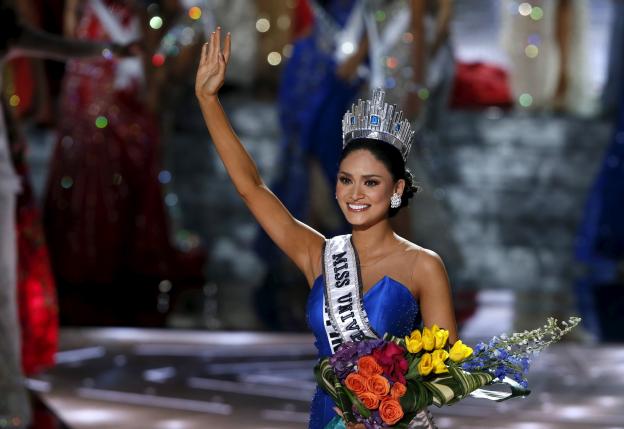
The 64th Miss Universe pageant concluded with a moment of high drama that briefly overshadowed the achievements of the contestants. During the final moments of the telecast, host Steve Harvey mistakenly announced Ariadna Gutiérrez of Colombia as the winner. Gutiérrez was crowned and began her celebratory walk before Harvey returned to the stage to issue a correction. He clarified that Gutiérrez was the first runner-up and that the actual winner of Miss Universe 2015 was Pia Wurtzbach of the Philippines.
This correction led to a televised moment of visible confusion and emotional upheaval, as the crown was removed from Gutiérrez and placed upon Wurtzbach. The incident immediately became a global news sensation, generating millions of social media impressions and dominating headlines in both Western and Eastern media outlets. In the immediate aftermath, public discourse focused heavily on the mechanics of the error and the grace displayed by both contestants. However, as the dust settled, a different facet of Wurtzbach’s personality began to circulate online, bridging the gap between the pageant world and the music industry.
The Discovery of a Global Fan: Pia Wurtzbach and Super Junior
Within days of her victory, digital "archaeologists" and K-pop enthusiasts uncovered a series of archived tweets from Wurtzbach’s personal Twitter account dating back to 2009 and 2011. These posts revealed that the newly crowned Miss Universe was a devoted "ELF" (Ever Lasting Friend), the official name for fans of the South Korean boy band Super Junior.
The tweets were remarkably relatable to the K-pop community. In one post, Wurtzbach referred to herself as "Mrs. Siwon Choi," expressing her admiration for Choi Siwon, one of the group’s most prominent members. Other posts discussed her excitement for new music releases and her participation in the collective experiences of the fandom. For many, this discovery humanized the Miss Universe titleholder, transforming her from a distant symbol of perfection into a contemporary participant in global pop culture.
The revelation resonated particularly well in the Philippines, a nation that has historically been one of the strongest strongholds for the Hallyu Wave in Southeast Asia. The fact that a national icon and international beauty queen shared the same hobbies and passions as millions of young Filipinos created a unique sense of kinship and national pride.
Statistical Context: The Hallyu Wave in the Philippines
The significance of Wurtzbach’s fandom cannot be fully understood without acknowledging the scale of K-pop’s influence in the Philippines. According to data from the Korea Foundation for International Cultural Exchange (KOFICE), the Philippines consistently ranks among the top countries for consumption of Korean cultural content, including music, television dramas (K-dramas), and skincare products.
By 2015, the year of Wurtzbach’s crowning, the Philippine K-pop market had matured significantly. Major concert tours, such as Super Junior’s "Super Show," had become regular fixtures in Manila’s entertainment calendar. Data from Twitter (now X) indicated that the Philippines was often in the top five globally for K-pop-related conversations. Wurtzbach’s public history as a fan was not merely a niche interest; it was a reflection of a massive cultural shift where South Korean media had become a dominant force in Filipino youth culture.
Official Responses and Cross-Industry Interaction
The story took an even more official turn when members of Super Junior and their management, SM Entertainment, acknowledged the Miss Universe winner. Choi Siwon himself took to Instagram to congratulate Wurtzbach on her victory. Posting a photo of himself in a tuxedo alongside a photo of Wurtzbach in her blue pageant gown, he wrote, "Pia Alonzo Wurtzbach, my heartiest congratulations on becoming the 64th Miss Universe. And please be my guest for the next Super Show! I look forward to seeing you shining on the world."
This interaction marked a rare moment where the world of elite beauty pageantry and the K-pop industry intersected directly. Leeteuk, the leader of Super Junior, also posted a congratulatory message, noting the immense popularity of the group in the Philippines and expressing pride that a fan had achieved such a prestigious title. These official responses validated the fandom and elevated the narrative from a series of "old tweets" to a legitimate cultural exchange.
Analysis of Implications: The Power of Relatability
The "Pia-Siwon" phenomenon highlights several key trends in modern media. First, it demonstrates the power of "social media history" in shaping public persona. For celebrities, past digital footprints can either become liabilities or assets. In Wurtzbach’s case, her past as a K-pop fan acted as a powerful PR tool, making her accessible to a younger, digitally active demographic that might not otherwise follow beauty pageants.
Second, the event underscores the "soft power" of South Korea. The fact that a Miss Universe from the Philippines was influenced by a Korean boy band is a testament to the effectiveness of the Hallyu Wave as a tool of cultural diplomacy. It shows that K-pop has moved beyond music to become a shared language among global citizens.
Third, the incident illustrated the changing face of the Miss Universe organization under its then-new ownership. In 2015, the organization was transitioning away from the Donald Trump era toward a focus on "confidently beautiful" women with substance and relatable backgrounds. Wurtzbach’s open enthusiasm for pop culture fit this new branding perfectly—she was a woman who could navigate the high-pressure environment of a global pageant while remaining grounded in her personal interests.

The Fandom Perspective: Overcoming the "Stigma" of Stanning
An interesting psychological component of this story is the discussion it sparked regarding the stigma of being a "stan" (an obsessive fan). In the original reporting and subsequent discussions, many fans expressed a sense of vindication. For years, K-pop fans often faced ridicule for their intense dedication to foreign-language music and idols. Seeing a woman achieve the pinnacle of traditional success—the Miss Universe crown—while being an unapologetic fan provided a sense of legitimacy to the community.
Wurtzbach herself addressed this in later interviews, acknowledging that her interest in K-pop was a genuine part of her life. This transparency helped dismantle the stereotype that fandom is only for the immature or the distracted. Instead, it framed fandom as a common thread of modern identity that transcends professional status or social standing.
Long-term Impact and Legacy
In the years following 2015, the connection between Pia Wurtzbach and the K-pop world has remained a point of interest. She has since attended K-pop events, interviewed various Korean stars, and continued to express her support for the genre. This enduring connection has helped maintain her relevance in a fast-paced media cycle where pageant winners often fade from the spotlight after their reign ends.
Furthermore, the 2015 pageant served as a catalyst for the Miss Universe organization to lean more heavily into social media engagement. The viral nature of the Steve Harvey error, combined with the organic reach of the K-pop reveal, showed the organization the immense value of digital-first storytelling. Subsequent pageants have seen an increased focus on the contestants’ digital footprints and their ability to engage with online communities.
Conclusion
The story of Pia Wurtzbach’s Miss Universe victory is a multifaceted narrative that began with a technical error and evolved into a celebration of global cultural connectivity. By bridging the gap between the traditional prestige of the Miss Universe crown and the modern, high-energy world of K-pop fandom, Wurtzbach became more than just a beauty queen; she became a symbol of the modern, interconnected global citizen.
Her journey from a fan tweeting about her "bias" in 2009 to receiving a personal invitation from that same idol while wearing the Miss Universe crown in 2015 remains a definitive "Cinderella story" of the digital age. It serves as a reminder that in the modern era, cultural boundaries are increasingly porous, and the passions that define our private lives can often become the bridge to our greatest public successes. As the Hallyu Wave continues to expand and the Miss Universe pageant evolves, the 2015 intersection of these two worlds remains a landmark moment in the history of 21st-century popular culture.